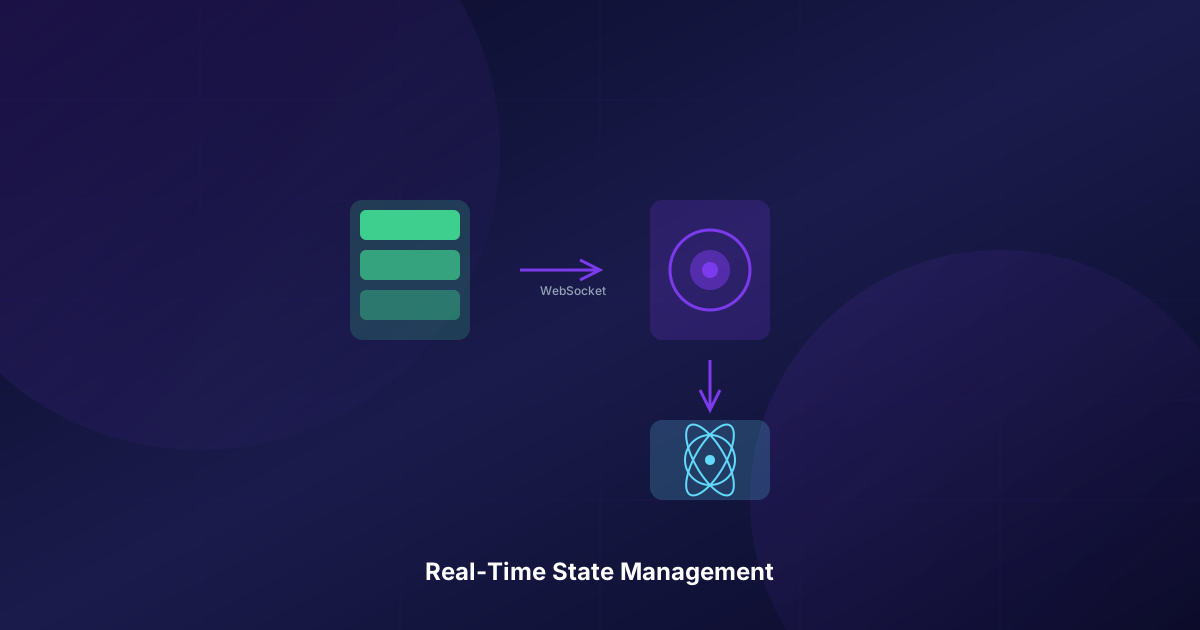
Building financial applications demands instant data updates, robust state synchronization, and a developer experience that scales with complexity. In this post, we walk through how we combine Supabase for real-time database subscriptions with Valtio for lightweight, proxy-based state management.
Why This Stack?
| Concern | Supabase | Valtio |
|---|---|---|
| Real-time data | Postgres + Realtime channels | — |
| Client state | — | Proxy-based reactivity |
| Auth | Built-in Row Level Security | — |
| Bundle size | Server-side | ~3 kB |
Financial dashboards often display live portfolio values, transaction feeds, and alerts. Supabase's Realtime feature pushes row-level changes over WebSockets, while Valtio lets React components subscribe to only the slices of state they need—no context providers or reducers required.
Architecture Overview
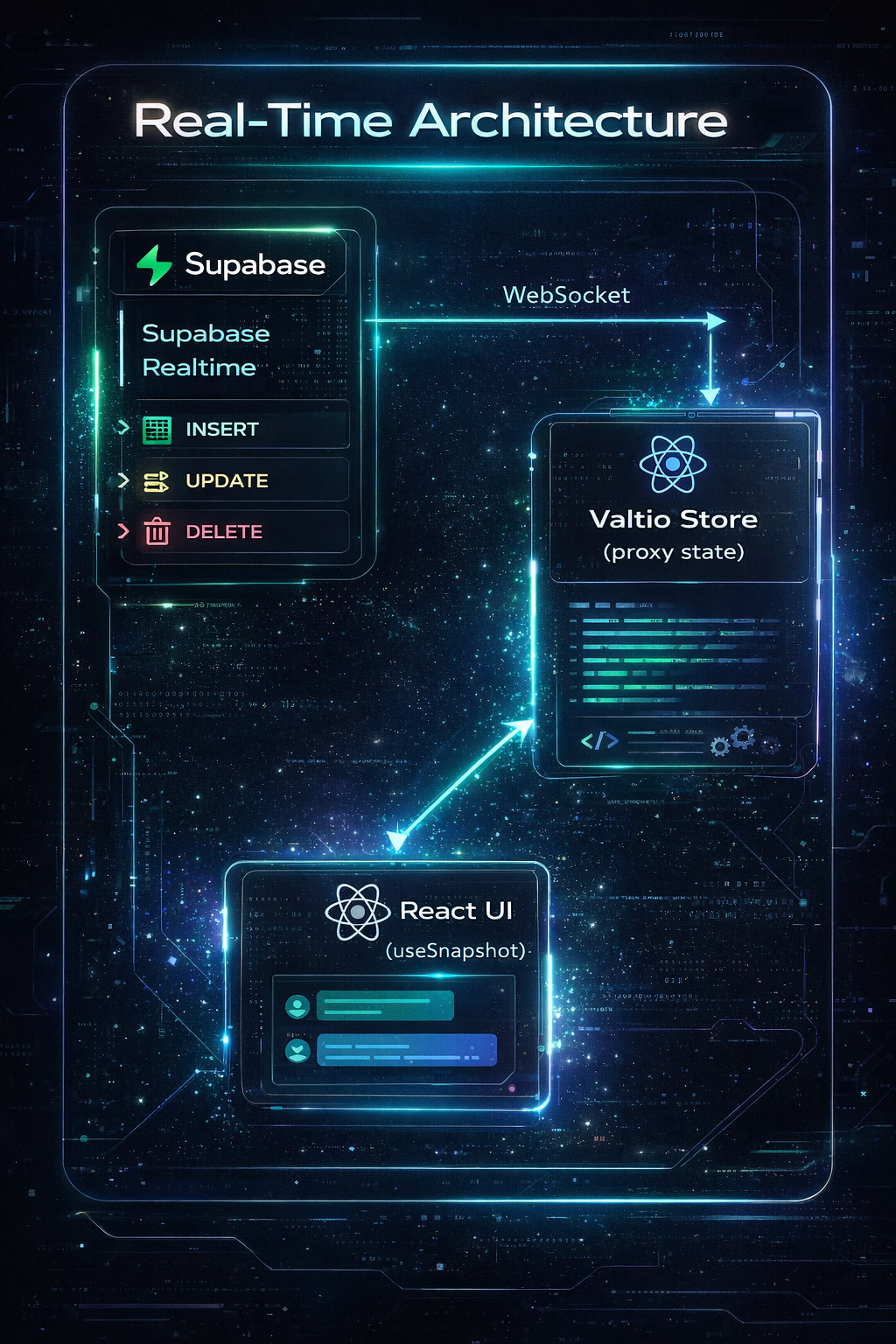
- Supabase client subscribes to a Postgres channel (e.g.,
transactions). - On
INSERT,UPDATE, orDELETE, the callback mutates the Valtio store. - React components using
useSnapshotre-render automatically.
Step-by-Step Implementation
1. Define the Valtio Store
// lib/stores/transactionStore.ts
import { proxy } from 'valtio';
import type { Transaction } from '@/lib/types';

/**
 * Proxy store for transactions.
 * Mutations here trigger React re-renders via useSnapshot.
 */
export const transactionStore = proxy<{
  transactions: Transaction[];
  isLoading: boolean;
}>({
  transactions: [],
  isLoading: true,
});
2. Subscribe to Supabase Realtime
// lib/services/subscribeTransactions.ts
import { supabase } from '@/lib/supabase/client';
import { transactionStore } from '@/lib/stores/transactionStore';

export function subscribeTransactions(userId: string) {
  // Initial fetch
  supabase
    .from('transactions')
    .select('*')
    .eq('user_id', userId)
    .order('created_at', { ascending: false })
    .then(({ data }) => {
      transactionStore.transactions = data ?? [];
      transactionStore.isLoading = false;
    });

  // Realtime subscription
  const channel = supabase
    .channel('transactions-realtime')
    .on(
      'postgres_changes',
      { event: '*', schema: 'public', table: 'transactions', filter: `user_id=eq.${userId}` },
      (payload) => {
        switch (payload.eventType) {
          case 'INSERT':
            transactionStore.transactions.unshift(payload.new as Transaction);
            break;
          case 'UPDATE':
            const idx = transactionStore.transactions.findIndex((t) => t.id === payload.new.id);
            if (idx !== -1) transactionStore.transactions[idx] = payload.new as Transaction;
            break;
          case 'DELETE':
            transactionStore.transactions = transactionStore.transactions.filter(
              (t) => t.id !== payload.old.id
            );
            break;
        }
      }
    )
    .subscribe();

  // Return unsubscribe function for cleanup
  return () => {
    supabase.removeChannel(channel);
  };
}
3. Consume in React
// components/TransactionFeed.tsx
'use client';

import { useSnapshot } from 'valtio';
import { transactionStore } from '@/lib/stores/transactionStore';

export function TransactionFeed() {
  const { transactions, isLoading } = useSnapshot(transactionStore);

  if (isLoading) return <p>Loading...</p>;

  return (
    <ul>
      {transactions.map((tx) => (
        <li key={tx.id}>
          {tx.description} — ${tx.amount}
        </li>
      ))}
    </ul>
  );
}
Key Takeaways
- Decoupled data layer: Supabase handles persistence and real-time; Valtio handles UI state.
- Minimal boilerplate: No Redux slices, no context wrappers.
- Scalable pattern: Add more tables/channels without restructuring your state tree.
When to Use This Pattern
- Dashboards with live metrics (finance, analytics, IoT).
- Collaborative apps where multiple users edit the same data.
- Any scenario where you need sub-second UI updates from a Postgres backend.
Further Reading
Have questions or want to see this pattern in action? Contact us to schedule a technical deep-dive.
Topics covered
SupabaseValtioReal-TimeState ManagementFinancial Apps
P
Written by Prizmstack Team
Full-spectrum software agency